
A carbon steel overview must begin with the fundamental understanding that carbon steel is an alloy of iron and carbon, with carbon content typically ranging from 0.05% to 2.0% by weight. This seemingly simple combination creates materials with remarkably diverse properties depending on the exact carbon content and the presence of other alloying elements. Low-carbon steels, containing less than 0.30% carbon, offer excellent formability and weldability for applications like automotive body panels and structural shapes. Medium-carbon steels, with 0.30% to 0.60% carbon, provide increased strength for machinery components and railway tracks.
The carbon steel overview extends to high-carbon varieties containing 0.60% to 1.0% carbon, which offer maximum strength and hardness for applications like springs, cutting tools, and high-strength wires. As carbon content increases, steel becomes harder and stronger but simultaneously loses ductility and becomes more difficult to weld. This inverse relationship between strength and formability represents one of the fundamental trade-offs in materials engineering. Understanding this balance helps designers select the appropriate carbon steel grade for their specific application requirements.
The microstructure of carbon steel varies significantly with carbon content and thermal history, directly influencing mechanical behavior. Low-carbon steels typically exhibit a ferrite-pearlite microstructure that provides a good combination of strength and ductility for forming operations. Higher carbon contents produce increasing amounts of pearlite, a lamellar structure of ferrite and cementite that contributes to strength but reduces ductility. Heat treatment processes like annealing, normalizing, and quenching can dramatically alter these microstructures to achieve desired metal material properties.
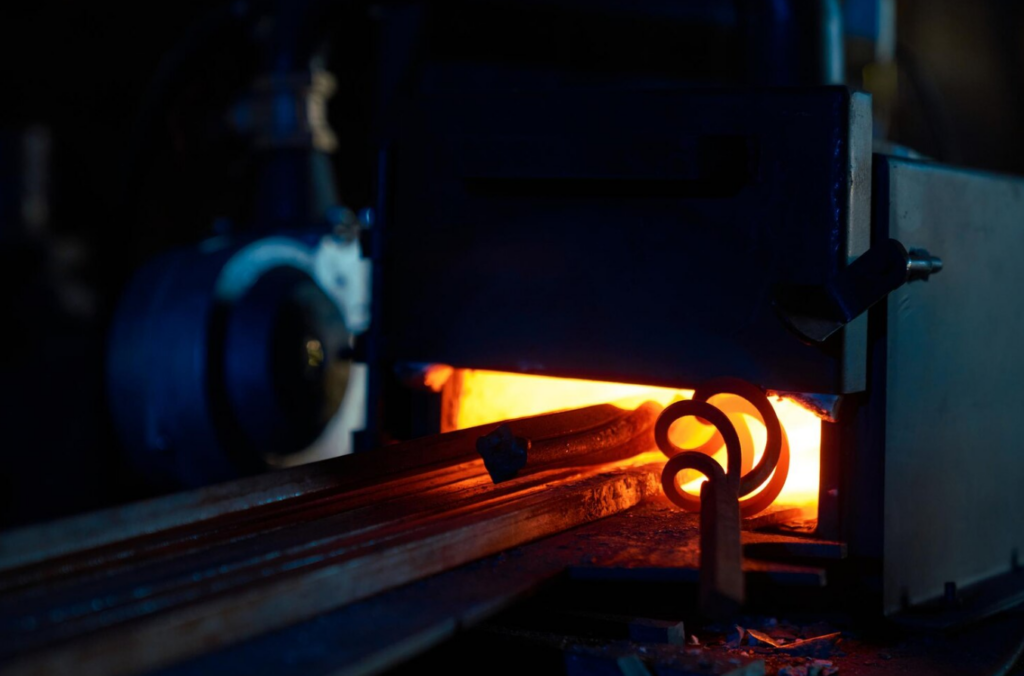
Manufacturing processes for carbon steel begin with melting in basic oxygen furnaces or electric arc furnaces, followed by refining to achieve target chemistry. Continuous casting transforms the molten steel into semi-finished shapes like slabs, blooms, and billets for further processing. Hot rolling reduces these shapes to final dimensions while refining the grain structure and improving mechanical properties. Some carbon steel products undergo additional cold working or heat treatment to achieve specific characteristics required for demanding applications.
Applications for carbon steel span virtually every sector of the economy, from construction and transportation to energy and consumer goods. Structural shapes, reinforcing bars, and plate products form the backbone of buildings, bridges, and industrial facilities throughout the Indiana steel sector and beyond. Automotive manufacturers consume millions of tons annually for body panels, frames, and suspension components. Pipeline steels transport oil and gas across continents, while ship plate forms the hulls of vessels traversing the world’s oceans. This versatility explains why carbon steel remains the most widely used engineering material on earth.